Back to Articles
Tanks & Vessels 1 min read
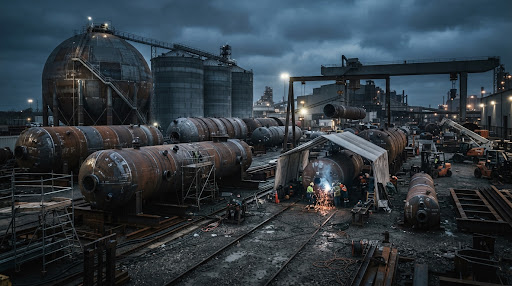
Key Specifications for Custom Tanks, Vessels and Silos

Capacity alone is not enough to design a tank or silo. Learn the specifications that set wall thickness, material, fabrication method and testing.

Key Specifications for Custom Tanks, Vessels and Silos

Stored product and operating conditions

The starting point is what will be stored: a liquid, a gas or a bulk solid, its density, and whether it is corrosive, flammable or food-grade. Then the operating conditions: pressure and temperature, and whether the tank works under pressure or is open to atmosphere.

Core specifications

  • Working capacity and the dimensions available on site.
  • Design pressure and temperature, and the required code such as ASME or API.
  • Material and the corrosion allowance added to the thickness.
  • Nozzles, connections and manways for maintenance.
  • Supports or foundations, and wind and seismic loads.

What makes silos different

Silos store solids such as cement, grain and feed, so their design focuses on the hopper cone angle to keep material flowing without bridging, on aeration and discharge systems, and on wear resistance at the outlet where abrasion is highest.

Tests before delivery

Typical tests include non-destructive weld examination, hydrostatic or leak testing, dimensional and straightness checks, and coating thickness measurement. The results are delivered in the tank's quality dossier.

More Articles You May Like